
 Skip to content

Skin discoloration and changes in texture often develop for different reasons. Years of sun exposure can contribute to uneven pigmentation, while declining collagen production may make fine lines, enlarged pores, and skin laxity more noticeable. Treating these concerns requires an understanding of what happens at different skin depths.
IPL photofacials and radiofrequency (RF) microneedling offer two distinct approaches that can complement each other. For aesthetic professionals, skin rejuvenation training provides an opportunity to understand these technologies and the clinical considerations involved in combining them.
IPL photofacials and RF microneedling work together by addressing different skin concerns through complementary technologies. IPL uses controlled pulses of light to target pigmentation, sunspots, and visible redness, while RF microneedling delivers radiofrequency energy beneath the skin’s surface to stimulate collagen production and improve texture, fine lines, and mild skin laxity.
Duo Skin Rejuvenation combines intense pulsed light (IPL) with RF microneedling to address visible skin concerns through separate energy-based mechanisms.
IPL delivers broad-spectrum light that targets specific pigments in the skin. RF microneedling uses fine needles to deliver radiofrequency energy into selected tissue depths.
The distinction is important because pigmentation changes and structural skin concerns do not respond to identical treatments.
IPL primarily addresses certain color-related irregularities, while RF microneedling focuses on tissue remodeling. Combining these approaches may allow practitioners to address multiple concerns within a coordinated treatment plan.
IPL works through selective light absorption. When targeted structures absorb light energy, that energy converts into heat.
Melanin absorbs certain wavelengths, allowing IPL to address selected dark spots and sun-related pigmentation. Hemoglobin absorbs other wavelengths, making IPL useful for certain visible blood vessels and redness.
Practitioners may consider IPL for concerns such as:
Treatment effectiveness depends on the patient’s skin characteristics, the condition being addressed, and device settings.
Because melanin absorbs light, darker skin tones carry a greater risk of burns or unwanted pigmentation changes with IPL. Careful patient selection is essential.
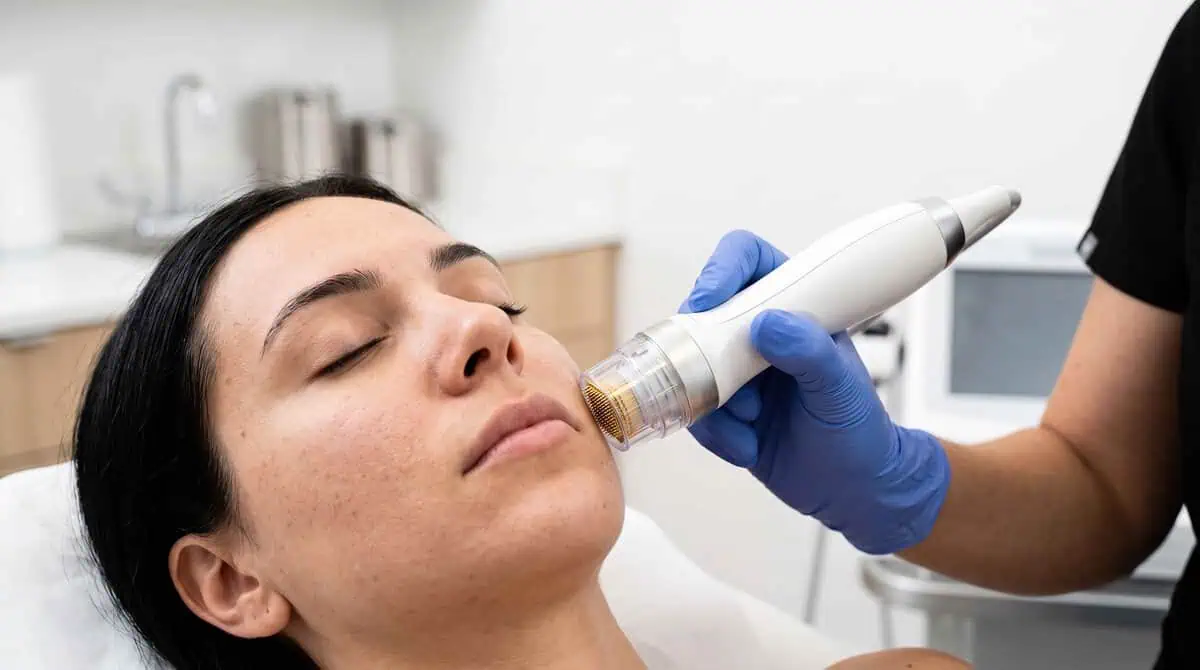
Unlike IPL, RF microneedling introduces energy through needles inserted into the skin.
The needles deliver controlled radiofrequency energy at selected depths, generating heat within targeted tissue. This thermal stimulation can initiate remodeling processes involving collagen and elastin.
Collagen contributes to skin structure, while elastin supports elasticity. Changes in these proteins may gradually improve skin texture and firmness.
RF microneedling is commonly used to address certain acne scars, fine lines, enlarged pores, and mild skin laxity.
However, deeper treatment does not automatically mean better results. Excessive energy or inappropriate needle depth can damage tissue and cause complications, including burns, scarring, or unwanted fat loss.
One of the more important aspects of Duo Skin Rejuvenation is deciding how both procedures fit into an individual treatment plan.
A patient with pigmentation and textural concerns may benefit from different treatment priorities than someone primarily concerned about acne scarring.
Practitioners must determine which concern requires attention first, how the skin is likely to respond, and what recovery period is appropriate.
IPL and RF microneedling may be scheduled separately depending on the devices, treatment intensity, and patient’s condition.
Performing both procedures during one appointment is not automatically suitable. A coordinated approach should account for cumulative skin irritation, inflammation, and the manufacturer’s treatment guidance.
Professionals pursuing IPL and RF microneedling training must understand more than device operation. The following competencies help support safe and informed treatment decisions.
These competencies require theoretical instruction alongside supervised practical experience.
Recovery differs between IPL photofacials and RF microneedling.
Following IPL, patients may experience temporary redness or darkening of treated pigmentation before gradual fading occurs.
RF microneedling may produce redness, swelling, tenderness, and temporary skin sensitivity.
Practitioners typically recommend gentle skincare, avoiding unnecessary irritation, and following appropriate sun protection measures.
Changes in pigmentation may become noticeable over several weeks, while collagen remodeling generally develops more gradually.
Results vary, and some patients may require multiple treatment sessions based on their individual goals and clinical response.
At La Vida Laser & Aesthetics Institute, we provide skin rejuvenation certification in Houston through our Skin Rejuvenation Duo Training Course, which covers IPL photofacials and RF microneedling.
Our hybrid program consists of eight instructional hours, including four hours of self-paced online coursework and four hours of in-person practical training in Houston.
Our team introduces students to skin anatomy, the Fitzpatrick scale, energy-based treatment principles, patient consultation, medical clearance, and complication management.
During hands-on instruction, students practice treatment techniques on live models under instructor supervision.
Our course also covers treatment guidelines, pre-treatment preparation, and post-treatment considerations.
Students completing the program receive certifications for the two procedures covered.
For professionals considering skin rejuvenation certification in Houston, we encourage reviewing our Skin Rejuvenation Duo Training Course to understand the curriculum and admission requirements.
Combining these treatments may address pigmentation and texture concerns through different energy-based mechanisms.
Course certification does not independently grant legal authorization, and practitioners must satisfy applicable licensing and supervision requirements.
Supervised practical instruction helps students understand device handling, treatment techniques, and patient safety considerations.